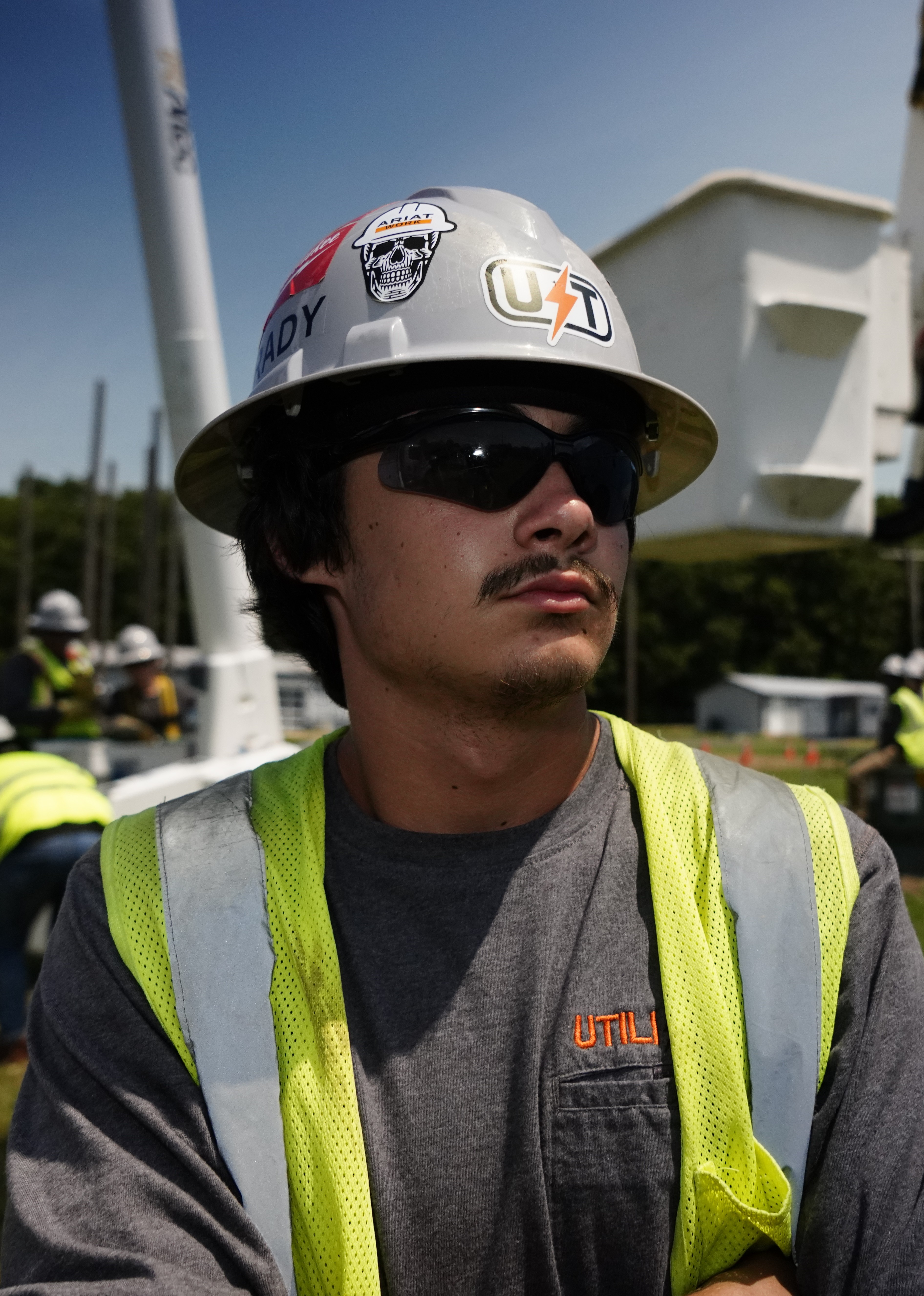
America’s electric grid is in the middle of a long, expensive upgrade cycle—and that translates into sustained job demand in power transmission and distribution (T&D). The “why” is simple: electricity use is rising, extreme weather is stressing infrastructure, and new generation (especially renewables) is being built farther from load centers, forcing utilities and developers to expand and harden the network that moves power from plants to homes and businesses. The U.S. Department of Energy has publicly stated goals that include expanding long-distance transmission capacity by 16% by 2030, including 7,500 miles of new transmission lines. Add in major federal funding programs for large transmission projects—such as DOE support for nearly 1,000 miles of new lines and thousands of jobs tied to those builds—and you get a clear signal: the grid is hiring.
At the center of this demand are the frontline field roles: electrical power-line installers and repairers (lineworkers). The Bureau of Labor Statistics projects 7% employment growth from 2024 to 2034 for this occupation, with about 10,700 openings per year on average—driven not only by new work, but also by retirements and turnover. In other words, even if construction pacing fluctuates, the replacement pipeline stays active.
But “linework” is only the visible tip of the workforce pyramid. Transmission and distribution projects require a whole ecosystem of ancillary jobs that must be trained, safety-qualified, and job-ready:
1) Construction and heavy equipment support
Transmission builds rely on CDL drivers, equipment operators, and rigging crews to move poles, reels, transformers, and hardware; set structures; and manage right-of-way logistics. Crane and lifting operations, in particular, are integral wherever heavy components and tall structures are involved.
2) Substation and system infrastructure roles
As utilities add capacity and improve reliability, they also expand and modernize substations—the nodes that step voltage up or down. That creates demand for substation technicians, electricians, and specialized workers who can assemble, terminate, test, and troubleshoot high-voltage equipment. (BLS also shows strong projected growth for electricians overall.)
3) Controls, protection, and communications
Modern grids increasingly depend on automation, monitoring, and protection. That means relay and protection techs, SCADA/controls support, and communications work (often including fiber) to ensure faults are isolated quickly and operators can see the system in real time.
4) Vegetation management and right-of-way operations
Keeping lines clear is reliability work. Utilities and contractors employ crews for vegetation control, inspections, and compliance—especially as storms and growth cycles increase outage risk.
5) Safety, compliance, and workforce readiness
Every role above requires foundational skills: hazard recognition, PPE discipline, fall protection, rescue readiness, and a mindset built around procedure—not improvisation.
That’s where a training school like Utilitrain fits in. Employers don’t just need “workers.” They need people who can enter the field understanding the environment, the tools, the terminology, and—most importantly—the safety culture that keeps crews alive. With grid expansion goals, major transmission planning pipelines, and steady replacement needs, the industry’s message is consistent: trained talent is the bottleneck—and training is the advantage.
Utilitrain is a private career school in Elkton, Maryland offering a 15-week Electrical Lineman Program, CDL training, and utility safety/specialty training for students and employers in the Mid-Atlantic region.
Utilitrain operates as a Private Career School under the approval of the Maryland Higher Education Commission (MHEC).


.png)

