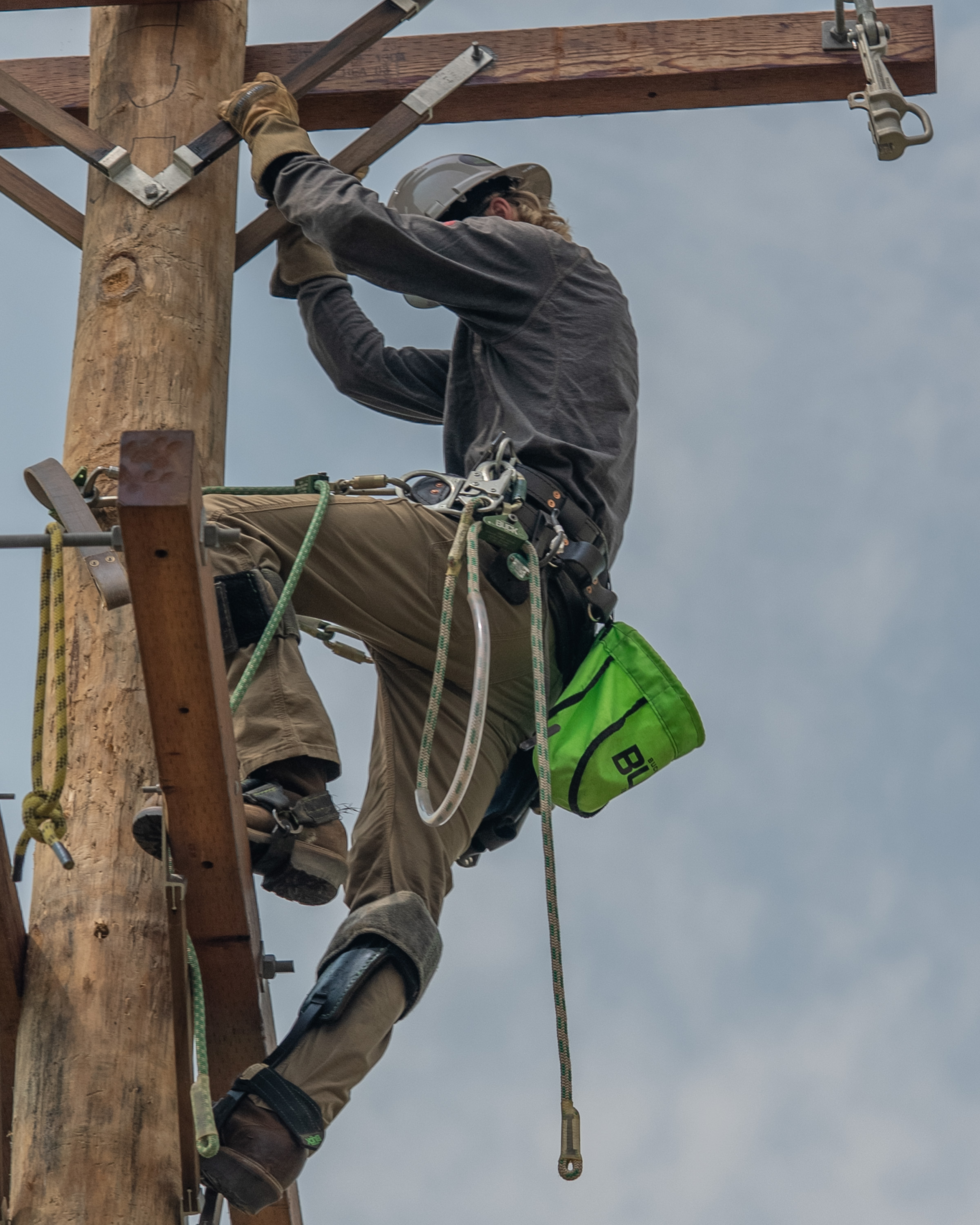
Lineman school costs vary widely, but current reporting shows a median program cost of about $8,400 across a large sample of schools.
Broader estimates put total attendance for many programs in the roughly $17,000 to $48,000 range once tuition, fees, books, tools, and living expenses are included.
Some schools bundle more into tuition, while others separate out CDL training, tools, and housing-related costs.
Utilitrain’s Electrical Lineman Program is at $21,370 with CDL training included and runs 15 weeks in Elkton, Maryland.
That places it above the median cost reported across lineman schools, but still within the common range for specialized hands-on programs.
At Utilitrain, we also emphasize both classroom and field competencies, which can make the price feel more comprehensive than a tuition-only figure.
Utilitrain: $21,370 15 weeks, CDL, hand tools, PPE, boots included
School A: $17,450 15 weeks; CDL costs vary by state
School B: about $15,995 to $17,995 15-week electrical program; financial aid available, no federal Title IV funding
School C: $11,955 CDL add-on optional for $475
Housing can change the real cost of lineman education more than tuition alone. Industry cost guides note that living expenses may add about $5,000 to $10,000 for shorter programs, and some schools also charge housing fees or provide housing assistance. School A, for example, is noted as offering housing assistance for students who need it.
Sometimes yes, sometimes no, and this is a major cost checkpoint for lineman school shoppers.
Utilitrain includes CDL training in its listed $21,370 price.
School A says CDL education costs vary by state, while School C lists CDL as an optional add-on for $475.
If CDL is not bundled, students should treat it as a real extra expense, not a minor add-on.
Financial aid can make a big difference, but not all schools participate in the same programs.
School B offers financial aid but does not accept federal Title IV funding, while also supporting veterans with post-9/11 GI Bill certification.
School A also offers financial assistance, including a $2,000 scholarship and veterans assistance.
School C is also reported to offer financial aid and GI Bill support.
The best lineman schools are not always the cheapest; they are the ones that balance cost, hands-on training, housing support, CDL inclusion, and job preparation.
A lower sticker price can become more expensive if tools, housing, and CDL training are separate charges.
For students focused on electrical lineman training and line worker certification, it helps to compare the full out-of-pocket cost, not just tuition.
Before choosing a lineman school, ask each program for these exact numbers:
That checklist makes it easier to compare lineman education programs on equal footing and avoid surprises after enrollment.
Utilitrain is a private career school in Elkton, Maryland offering a 15-week Electrical Lineman Program, CDL training, and utility safety/specialty training for students and employers in the Mid-Atlantic region.
Utilitrain operates as a Private Career School under the approval of the Maryland Higher Education Commission (MHEC).


.png)

